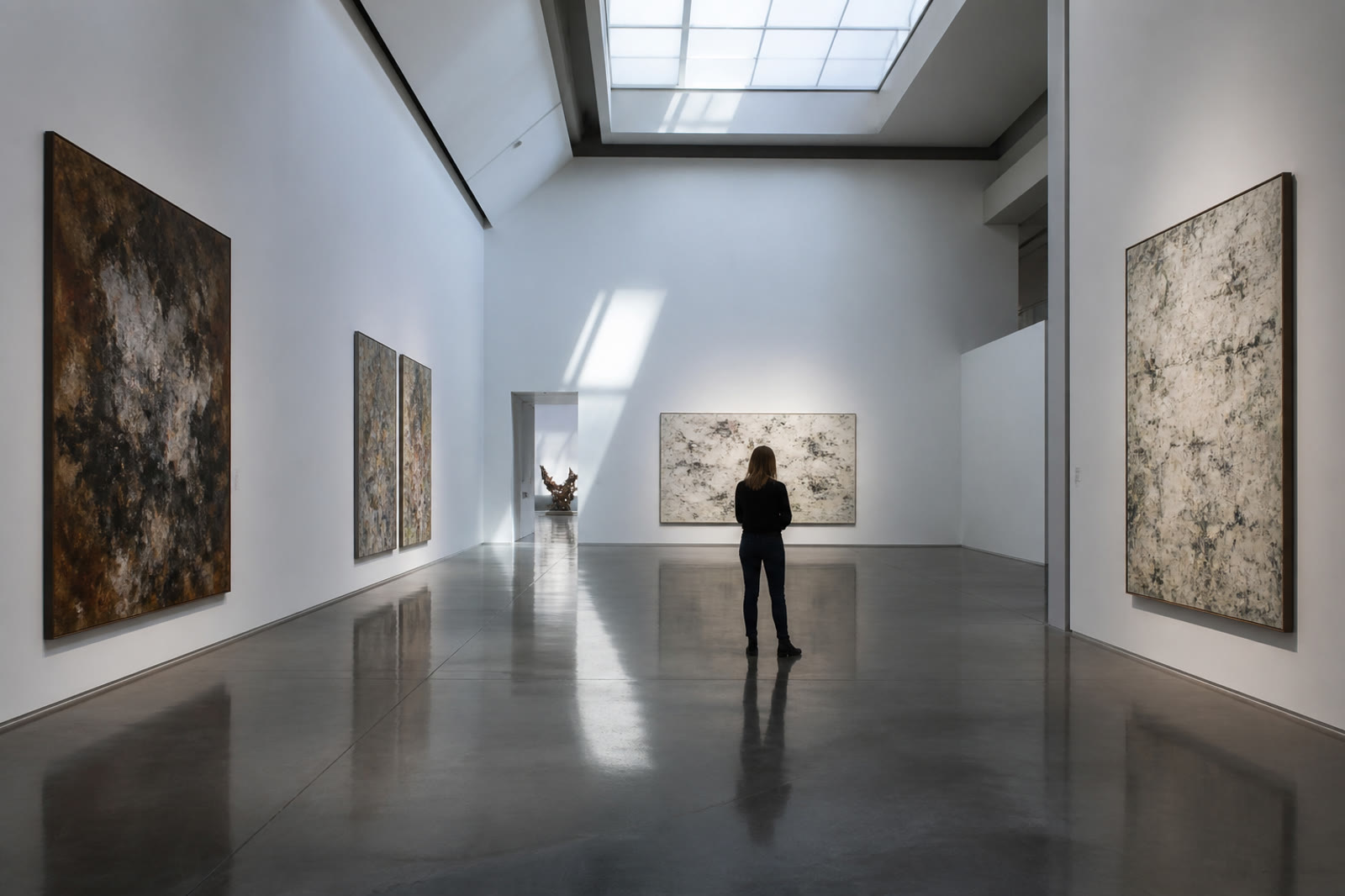
The newest gallery at one of Europe’s most-visited museums contains eleven works, no wall text, and a strict cap of thirty visitors at a time. Entry requires a timed ticket and a promise, gently extracted at the door, to put your phone away. There is a four-month waiting list.
Call it the slow exhibition: a deliberate rejection of the blockbuster formula that has governed museum programming for a generation. Instead of maximizing throughput, a growing number of institutions are engineering scarcity — fewer works, fewer people, longer visits.
The trend began as an experiment. In 2024, a mid-sized museum in the Netherlands restricted access to a single celebrated painting, offering visitors ten unhurried minutes alone with it. The slots sold out for a year, and exit surveys returned satisfaction scores the museum had never seen.
“We spent ten years optimizing for the photograph,” said the museum’s director. “Now we are optimizing for the memory. It turns out people will pay more, and travel further, for an experience they cannot capture.”
We spent ten years optimizing for the photograph. Now we are optimizing for the memory.
The economics are counterintuitive but increasingly persuasive. Slow galleries admit fewer people but at premium prices, and their visitors linger — in the café, the bookshop, the membership queue. Two institutions report that overall revenue per visitor has risen by more than a third since introducing capped-entry formats.
Skeptics warn of a creeping elitism: quiet, it is noted, is being sold at a markup, and the timed-ticket model favors those who can plan months ahead. Several museums have responded by reserving free slots for local residents and school groups.
What no one disputes is the demand. In an attention economy defined by speed, the scarcest luxury turns out to be the permission to stand still. Museums, accidentally or not, have found themselves selling it.